Skip to content

Secure IT

Stay Secure. Stay Informed.

Primary Menu
  • Home
  • Sources
    • Krebs On Security
    • Security Week
    • The Hacker News
    • Schneier On Security
  • Home
  • The Hacker News
  • OBSCURE#BAT Malware Uses Fake CAPTCHA Pages to Deploy Rootkit r77 and Evade Detection
  • The Hacker News

OBSCURE#BAT Malware Uses Fake CAPTCHA Pages to Deploy Rootkit r77 and Evade Detection

[email protected] The Hacker News Published: March 14, 2025 | Updated: March 14, 2025 3 min read
2 views

Mar 14, 2025Ravie LakshmananThreat Intelligence / Malware

OBSCURE#BAT Malware

A new malware campaign has been observed leveraging social engineering tactics to deliver an open-source rootkit called r77.

The activity, condemned OBSCURE#BAT by Securonix, enables threat actors to establish persistence and evade detection on compromised systems. It’s currently not known who is behind the campaign.

The rootkit “has the ability to cloak or mask any file, registry key or task beginning with a specific prefix,” security researchers Den Iuzvyk and Tim Peck said in a report shared with The Hacker News. “It has been targeting users by either masquerading as legitimate software downloads or via fake captcha social engineering scams.”

The campaign is designed to mainly target English-speaking individuals, particularly the United States, Canada, Germany, and the United Kingdom.

Cybersecurity

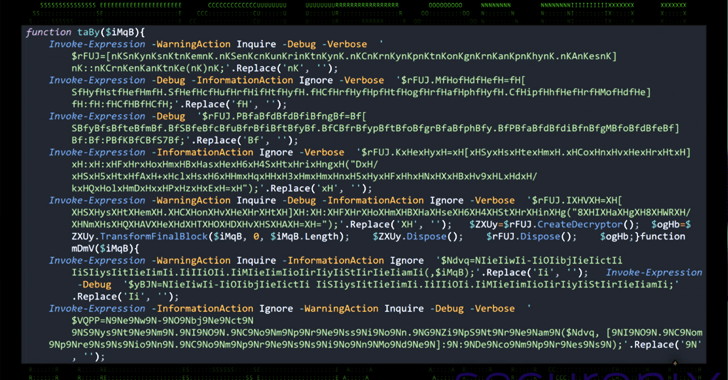
OBSCURE#BAT gets its name from the fact that the starting point of the attack is an obfuscated Windows batch script that, in turn, executes PowerShell commands to activate a multi-stage process that culminates in the deployment of the rootkit.

At least two different initial access routes have been identified to get users to execute the malicious batch scripts: One which uses the infamous ClickFix strategy by directing users to a fake Cloudflare CAPTCHA verification page and a second method that employs advertising the malware as legitimate tools like Tor Browser, VoIP software, and messaging clients.

While it’s not clear how users are lured to the booby-trapped software, it’s suspected to involve tried-and-tested approaches like malvertising or search engine optimization (SEO) poisoning.

Regardless of the method used, the first-stage payload is an archive containing the batch script, which then invokes PowerShell commands to drop additional scripts, make Windows Registry modifications, and set up scheduled tasks for persistence.

“The malware stores obfuscated scripts in the Windows Registry and ensures execution via scheduled tasks, allowing it to run stealthily in the background,” the researchers said. “Additionally, it modifies system registry keys to register a fake driver (ACPIx86.sys), further embedding itself into the system.”

OBSCURE#BAT Malware

Deployed over the course of the attack is a .NET payload that employs a bevy of tricks to evade detection. This includes control-flow obfuscation, string encryption, and using function names that mix Arabic, Chinese, and special characters.

Another payload loaded by means of PowerShell is an executable that makes use of Antimalware Scan Interface (AMSI) patching to bypass antivirus detections.

The .NET payload is ultimately responsible for dropping a system-mode rootkit named “ACPIx86.sys” into the “C:WindowsSystem32Drivers” folder, which is then launched as a service. Also delivered is a user-mode rootkit referred to as r77 for setting up persistence on the host and hiding files, processes, and registry keys matching the pattern ($nya-).

The malware further periodically monitors for clipboard activity and command history and saves them into hidden files for likely exfiltration.

Cybersecurity

“OBSCURE#BAT demonstrates a highly evasive attack chain, leveraging obfuscation, stealth techniques, and API hooking to persist on compromised systems while evading detection,” the researchers said.

“From the initial execution of the obfuscated batch script (install.bat) to the creation of scheduled tasks and registry-stored scripts, the malware ensures persistence even after reboots. By injecting into critical system processes like winlogon.exe, it manipulates process behavior to further complicate detection.”

The findings come as Cofense detailed a Microsoft Copilot spoofing campaign that utilizes phishing emails to take users to a fake landing page for the artificial intelligence (AI) assistant that’s engineered to harvest users’ credentials and two-factor authentication (2FA) codes.

Found this article interesting? Follow us on Twitter  and LinkedIn to read more exclusive content we post.

About The Author

[email protected] The Hacker News

See author's posts

Original post here

What do you feel about this?

  • The Hacker News

Post navigation

Previous: Unpatched Edimax Camera Flaw Exploited Since at Least May 2024
Next: New MassJacker Malware Targets Piracy Users, Hijacking Cryptocurrency Transactions

Author's Other Posts

$13.74M Hack Shuts Down Sanctioned Grinex Exchange After Intelligence Claims grinex.jpg

$13.74M Hack Shuts Down Sanctioned Grinex Exchange After Intelligence Claims

April 19, 2026 0 0
Mirai Variant Nexcorium Exploits CVE-2024-3721 to Hijack TBK DVRs for DDoS Botnet botnet-ddos.jpg

Mirai Variant Nexcorium Exploits CVE-2024-3721 to Hijack TBK DVRs for DDoS Botnet

April 19, 2026 0 0
Three Microsoft Defender Zero-Days Actively Exploited; Two Still Unpatched defender.jpg

Three Microsoft Defender Zero-Days Actively Exploited; Two Still Unpatched

April 19, 2026 0 0
Google Blocks 8.3B Policy-Violating Ads in 2025, Launches Android 17 Privacy Overhaul google-ads-android.jpg

Google Blocks 8.3B Policy-Violating Ads in 2025, Launches Android 17 Privacy Overhaul

April 19, 2026 0 0

Related Stories

grinex.jpg
  • The Hacker News

$13.74M Hack Shuts Down Sanctioned Grinex Exchange After Intelligence Claims

[email protected] The Hacker News April 19, 2026 0 0
botnet-ddos.jpg
  • The Hacker News

Mirai Variant Nexcorium Exploits CVE-2024-3721 to Hijack TBK DVRs for DDoS Botnet

[email protected] The Hacker News April 19, 2026 0 0
defender.jpg
  • The Hacker News

Three Microsoft Defender Zero-Days Actively Exploited; Two Still Unpatched

[email protected] The Hacker News April 19, 2026 0 0
google-ads-android.jpg
  • The Hacker News

Google Blocks 8.3B Policy-Violating Ads in 2025, Launches Android 17 Privacy Overhaul

[email protected] The Hacker News April 19, 2026 0 0
nist-cve.jpg
  • The Hacker News

NIST Limits CVE Enrichment After 263% Surge in Vulnerability Submissions

[email protected] The Hacker News April 17, 2026 0 1
europol.jpg
  • The Hacker News

Operation PowerOFF Seizes 53 DDoS Domains, Exposes 3 Million Criminal Accounts

[email protected] The Hacker News April 17, 2026 0 0

Trending Now

$13.74M Hack Shuts Down Sanctioned Grinex Exchange After Intelligence Claims grinex.jpg 1

$13.74M Hack Shuts Down Sanctioned Grinex Exchange After Intelligence Claims

April 19, 2026 0 0
Mirai Variant Nexcorium Exploits CVE-2024-3721 to Hijack TBK DVRs for DDoS Botnet botnet-ddos.jpg 2

Mirai Variant Nexcorium Exploits CVE-2024-3721 to Hijack TBK DVRs for DDoS Botnet

April 19, 2026 0 0
Three Microsoft Defender Zero-Days Actively Exploited; Two Still Unpatched defender.jpg 3

Three Microsoft Defender Zero-Days Actively Exploited; Two Still Unpatched

April 19, 2026 0 0
Google Blocks 8.3B Policy-Violating Ads in 2025, Launches Android 17 Privacy Overhaul google-ads-android.jpg 4

Google Blocks 8.3B Policy-Violating Ads in 2025, Launches Android 17 Privacy Overhaul

April 19, 2026 0 0

Connect with Us

Social menu is not set. You need to create menu and assign it to Social Menu on Menu Settings.

Trending News

$13.74M Hack Shuts Down Sanctioned Grinex Exchange After Intelligence Claims grinex.jpg 1
  • The Hacker News

$13.74M Hack Shuts Down Sanctioned Grinex Exchange After Intelligence Claims

April 19, 2026 0 0
Mirai Variant Nexcorium Exploits CVE-2024-3721 to Hijack TBK DVRs for DDoS Botnet botnet-ddos.jpg 2
  • The Hacker News

Mirai Variant Nexcorium Exploits CVE-2024-3721 to Hijack TBK DVRs for DDoS Botnet

April 19, 2026 0 0
Three Microsoft Defender Zero-Days Actively Exploited; Two Still Unpatched defender.jpg 3
  • The Hacker News

Three Microsoft Defender Zero-Days Actively Exploited; Two Still Unpatched

April 19, 2026 0 0
Google Blocks 8.3B Policy-Violating Ads in 2025, Launches Android 17 Privacy Overhaul google-ads-android.jpg 4
  • The Hacker News

Google Blocks 8.3B Policy-Violating Ads in 2025, Launches Android 17 Privacy Overhaul

April 19, 2026 0 0
NIST Limits CVE Enrichment After 263% Surge in Vulnerability Submissions nist-cve.jpg 5
  • The Hacker News

NIST Limits CVE Enrichment After 263% Surge in Vulnerability Submissions

April 17, 2026 0 1
Operation PowerOFF Seizes 53 DDoS Domains, Exposes 3 Million Criminal Accounts europol.jpg 6
  • The Hacker News

Operation PowerOFF Seizes 53 DDoS Domains, Exposes 3 Million Criminal Accounts

April 17, 2026 0 0
Apache ActiveMQ CVE-2026-34197 Added to CISA KEV Amid Active Exploitation apachemq.jpg 7
  • The Hacker News

Apache ActiveMQ CVE-2026-34197 Added to CISA KEV Amid Active Exploitation

April 17, 2026 0 0

You may have missed

grinex.jpg
  • The Hacker News

$13.74M Hack Shuts Down Sanctioned Grinex Exchange After Intelligence Claims

[email protected] The Hacker News April 19, 2026 0 0
botnet-ddos.jpg
  • The Hacker News

Mirai Variant Nexcorium Exploits CVE-2024-3721 to Hijack TBK DVRs for DDoS Botnet

[email protected] The Hacker News April 19, 2026 0 0
defender.jpg
  • The Hacker News

Three Microsoft Defender Zero-Days Actively Exploited; Two Still Unpatched

[email protected] The Hacker News April 19, 2026 0 0
google-ads-android.jpg
  • The Hacker News

Google Blocks 8.3B Policy-Violating Ads in 2025, Launches Android 17 Privacy Overhaul

[email protected] The Hacker News April 19, 2026 0 0
Copyright © 2026 All rights reserved. | MoreNews by AF themes.