Skip to content

Secure IT

Stay Secure. Stay Informed.

Primary Menu
  • Home
  • Sources
    • Krebs On Security
    • Security Week
    • The Hacker News
    • Schneier On Security
  • Home
  • The Hacker News
  • GitHub Mandates 2FA and Short-Lived Tokens to Strengthen npm Supply Chain Security
  • The Hacker News

GitHub Mandates 2FA and Short-Lived Tokens to Strengthen npm Supply Chain Security

[email protected] The Hacker News Published: September 23, 2025 | Updated: September 23, 2025 3 min read
0 views

Sep 23, 2025Ravie LakshmananSupply Chain Attack / Malware

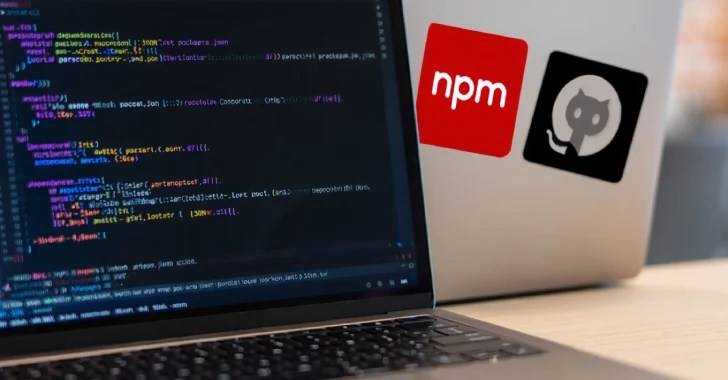
GitHub on Monday announced that it will be changing its authentication and publishing options “in the near future” in response to a recent wave of supply chain attacks targeting the npm ecosystem, including the Shai-Hulud attack.

This includes steps to address threats posed by token abuse and self-replicating malware by allowing local publishing with required two-factor authentication (2FA), granular tokens that will have a limited lifetime of seven days, and trusted publishing, which enables the ability to securely publish npm packages directly from CI/CD workflows using OpenID Connect (OIDC).

Trusted publishing, besides eliminating the need for npm tokens, establishes cryptographic trust by authenticating each publish using short-lived, workflow-specific credentials that cannot be exfiltrated or reused. Even more significantly, the npm CLI automatically generates and publishes provenance attestations for the package.

“Every package published via trusted publishing includes cryptographic proof of its source and build environment,” GitHub noted back in late July 2025. “Your users can verify where and how your package was built, increasing trust in your supply chain.”

DFIR Retainer Services

To support these changes, the Microsoft-owned company said it will be enacting the following steps –

  • Deprecate legacy classic tokens.
  • Deprecate time-based one-time password (TOTP) 2FA, migrating users to FIDO-based 2FA.
  • Limit granular tokens with publishing permissions to a shorter expiration.
  • Set publishing access to disallow tokens by default, encouraging usage of trusted publishers or 2FA-enforced local publishing.
  • Remove the option to bypass 2FA for local package publishing.
  • Expand eligible providers for trusted publishing.

The development comes a week after a supply chain attack codenamed Shai-Hulud injected a self-replicating worm into hundreds of npm packages that scanned developer machines for sensitive secrets and transmitted them to an attacker-controlled server.

“By combining self-replication with the capability to steal multiple types of secrets (and not just npm tokens), this worm could have enabled an endless stream of attacks had it not been for timely action from GitHub and open source maintainers,” GitHub’s Xavier René-Corail said.

Npm Package Includes QR Code-Based

The disclosure comes as software supply chain security company Socket said it identified a malicious npm package named fezbox that’s capable of harvesting browser passwords using a novel steganographic technique. The package is no longer available for download from npm. It attracted a total of 476 downloads since it was first published on August 21, 2025.

“In this package, the threat actor (npm alias janedu; registration email janedu0216@gmail[.]com) executes a payload within a QR code to steal username and password credentials from web cookies, within the browser,” security researcher Olivia Brown said.

CIS Build Kits

Fezbox claims to be a JavaScript utility consisting of common helper functions. But, in reality, it harbors stealthy code to fetch a QR code from a remote URL, parse the QR code, and execute the JavaScript payload contained within that URL.

The payload, for its part, attempts to read document.cookie, extracts username and password information from the cookie, and transmits the information to an external server (“my-nest-app-production>.up.railway[.]app”) via an HTTPS POST request.

“Most applications no longer store literal passwords in cookies, so it’s difficult to say how successful this malware would be at its goal,” Brown noted. “However, the use of a QR code for further obfuscation is a creative twist by the threat actor. This technique demonstrates how threat actors continue to improve their obfuscation techniques and why having a dedicated tool to check your dependencies is more important than ever.”

About The Author

[email protected] The Hacker News

See author's posts

Original post here

What do you feel about this?

  • The Hacker News

Post navigation

Previous: BadIIS Malware Spreads via SEO Poisoning — Redirects Traffic, Plants Web Shells
Next: ShadowV2 Botnet Exploits Misconfigured AWS Docker Containers for DDoS-for-Hire Service

Author's Other Posts

$13.74M Hack Shuts Down Sanctioned Grinex Exchange After Intelligence Claims grinex.jpg

$13.74M Hack Shuts Down Sanctioned Grinex Exchange After Intelligence Claims

April 19, 2026 0 0
Mirai Variant Nexcorium Exploits CVE-2024-3721 to Hijack TBK DVRs for DDoS Botnet botnet-ddos.jpg

Mirai Variant Nexcorium Exploits CVE-2024-3721 to Hijack TBK DVRs for DDoS Botnet

April 19, 2026 0 0
Three Microsoft Defender Zero-Days Actively Exploited; Two Still Unpatched defender.jpg

Three Microsoft Defender Zero-Days Actively Exploited; Two Still Unpatched

April 19, 2026 0 0
Google Blocks 8.3B Policy-Violating Ads in 2025, Launches Android 17 Privacy Overhaul google-ads-android.jpg

Google Blocks 8.3B Policy-Violating Ads in 2025, Launches Android 17 Privacy Overhaul

April 19, 2026 0 0

Related Stories

grinex.jpg
  • The Hacker News

$13.74M Hack Shuts Down Sanctioned Grinex Exchange After Intelligence Claims

[email protected] The Hacker News April 19, 2026 0 0
botnet-ddos.jpg
  • The Hacker News

Mirai Variant Nexcorium Exploits CVE-2024-3721 to Hijack TBK DVRs for DDoS Botnet

[email protected] The Hacker News April 19, 2026 0 0
defender.jpg
  • The Hacker News

Three Microsoft Defender Zero-Days Actively Exploited; Two Still Unpatched

[email protected] The Hacker News April 19, 2026 0 0
google-ads-android.jpg
  • The Hacker News

Google Blocks 8.3B Policy-Violating Ads in 2025, Launches Android 17 Privacy Overhaul

[email protected] The Hacker News April 19, 2026 0 0
nist-cve.jpg
  • The Hacker News

NIST Limits CVE Enrichment After 263% Surge in Vulnerability Submissions

[email protected] The Hacker News April 17, 2026 0 1
europol.jpg
  • The Hacker News

Operation PowerOFF Seizes 53 DDoS Domains, Exposes 3 Million Criminal Accounts

[email protected] The Hacker News April 17, 2026 0 0

Trending Now

$13.74M Hack Shuts Down Sanctioned Grinex Exchange After Intelligence Claims grinex.jpg 1

$13.74M Hack Shuts Down Sanctioned Grinex Exchange After Intelligence Claims

April 19, 2026 0 0
Mirai Variant Nexcorium Exploits CVE-2024-3721 to Hijack TBK DVRs for DDoS Botnet botnet-ddos.jpg 2

Mirai Variant Nexcorium Exploits CVE-2024-3721 to Hijack TBK DVRs for DDoS Botnet

April 19, 2026 0 0
Three Microsoft Defender Zero-Days Actively Exploited; Two Still Unpatched defender.jpg 3

Three Microsoft Defender Zero-Days Actively Exploited; Two Still Unpatched

April 19, 2026 0 0
Google Blocks 8.3B Policy-Violating Ads in 2025, Launches Android 17 Privacy Overhaul google-ads-android.jpg 4

Google Blocks 8.3B Policy-Violating Ads in 2025, Launches Android 17 Privacy Overhaul

April 19, 2026 0 0

Connect with Us

Social menu is not set. You need to create menu and assign it to Social Menu on Menu Settings.

Trending News

$13.74M Hack Shuts Down Sanctioned Grinex Exchange After Intelligence Claims grinex.jpg 1
  • The Hacker News

$13.74M Hack Shuts Down Sanctioned Grinex Exchange After Intelligence Claims

April 19, 2026 0 0
Mirai Variant Nexcorium Exploits CVE-2024-3721 to Hijack TBK DVRs for DDoS Botnet botnet-ddos.jpg 2
  • The Hacker News

Mirai Variant Nexcorium Exploits CVE-2024-3721 to Hijack TBK DVRs for DDoS Botnet

April 19, 2026 0 0
Three Microsoft Defender Zero-Days Actively Exploited; Two Still Unpatched defender.jpg 3
  • The Hacker News

Three Microsoft Defender Zero-Days Actively Exploited; Two Still Unpatched

April 19, 2026 0 0
Google Blocks 8.3B Policy-Violating Ads in 2025, Launches Android 17 Privacy Overhaul google-ads-android.jpg 4
  • The Hacker News

Google Blocks 8.3B Policy-Violating Ads in 2025, Launches Android 17 Privacy Overhaul

April 19, 2026 0 0
NIST Limits CVE Enrichment After 263% Surge in Vulnerability Submissions nist-cve.jpg 5
  • The Hacker News

NIST Limits CVE Enrichment After 263% Surge in Vulnerability Submissions

April 17, 2026 0 1
Operation PowerOFF Seizes 53 DDoS Domains, Exposes 3 Million Criminal Accounts europol.jpg 6
  • The Hacker News

Operation PowerOFF Seizes 53 DDoS Domains, Exposes 3 Million Criminal Accounts

April 17, 2026 0 0
Apache ActiveMQ CVE-2026-34197 Added to CISA KEV Amid Active Exploitation apachemq.jpg 7
  • The Hacker News

Apache ActiveMQ CVE-2026-34197 Added to CISA KEV Amid Active Exploitation

April 17, 2026 0 0

You may have missed

grinex.jpg
  • The Hacker News

$13.74M Hack Shuts Down Sanctioned Grinex Exchange After Intelligence Claims

[email protected] The Hacker News April 19, 2026 0 0
botnet-ddos.jpg
  • The Hacker News

Mirai Variant Nexcorium Exploits CVE-2024-3721 to Hijack TBK DVRs for DDoS Botnet

[email protected] The Hacker News April 19, 2026 0 0
defender.jpg
  • The Hacker News

Three Microsoft Defender Zero-Days Actively Exploited; Two Still Unpatched

[email protected] The Hacker News April 19, 2026 0 0
google-ads-android.jpg
  • The Hacker News

Google Blocks 8.3B Policy-Violating Ads in 2025, Launches Android 17 Privacy Overhaul

[email protected] The Hacker News April 19, 2026 0 0
Copyright © 2026 All rights reserved. | MoreNews by AF themes.